Protecting Your Vision
Through Early Detection
and Ongoing Care
Many eye diseases develop gradually and often show few, if any, symptoms in their earliest stages. By the time vision changes become noticeable, permanent damage may have already occurred.
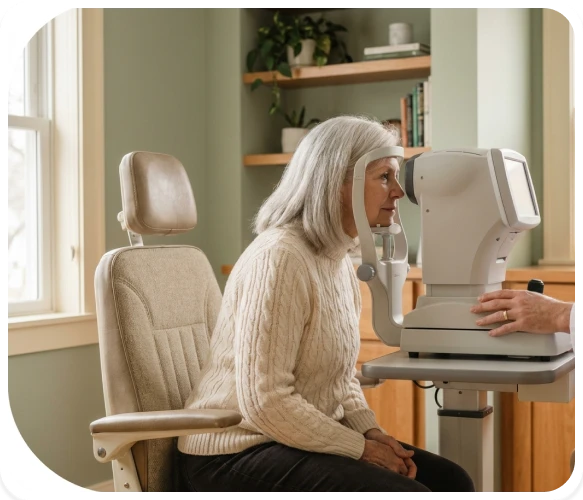
At Towne & Country Eyecare Associates, we use detailed eye examinations, retinal imaging, OCT technology, visual field testing, and personalized monitoring to identify eye diseases as early as possible. Whether you’re managing an existing condition or looking for peace of mind, our team is committed to helping you protect your vision for the long term.
When treatment beyond our office is needed, we work closely with specialists, primary care providers, and family members to help keep every aspect of your care connected.
Book with Us
Why Early Detection Matters
Conditions like glaucoma, macular degeneration, and diabetic eye disease may not affect vision until significant damage has already occurred.
That’s why we place such a strong emphasis on routine eye exams and proactive monitoring. Our technology allows us to look deeper into the eye, track changes over time, and identify concerns earlier than traditional examinations alone. Early detection can often:
- Preserve vision for longer
- Improve treatment outcomes
- Reduce the risk of permanent vision loss
- Provide more treatment options
- Help patients make informed decisions about their eye health

Technology That Helps Us See More
At Towne & Country Eyecare Associates, technology isn’t about adding extra tests. It’s about gathering better information so we can make more informed decisions about your care.
Depending on your needs, we may use:
- Optical Coherence Tomography (OCT)
- Eidon Widefield Retinal Imaging
- Radius XR Visual Field Testing
- Eye Pressure Testing
- Digital Photography and Documentation
These tools help us evaluate structures beneath the surface of the eye and monitor subtle changes that may not be visible during a standard exam.
Glaucoma Management
Often called the “silent thief of sight,” glaucoma can gradually damage the optic nerve without causing noticeable symptoms early on.
We use a combination of diagnostic tests, including:
- OCT imaging
- Retinal photography
- Applanation tonometry (eye pressure testing)
- Visual field testing
These tests help us detect and monitor glaucoma. Depending on your needs, treatment may include prescription eye drops, co-management with surgical specialists, or referral for advanced care.
Age-Related Macular Degeneration Management
AMD affects the macula, a part of the retina responsible for your central vision, and it becomes more common with age.
We use retinal imaging and OCT technology to monitor the health of the macula and identify changes as early as possible. When treatment is needed, we coordinate referrals with retinal specialists while continuing to monitor your eye health locally.
We also provide guidance regarding nutritional supplementation and lifestyle factors that may help support retinal health.
Other Conditions We
Diagnose and Manage
Not every eye health concern starts with obvious symptoms. That’s why we take a thorough approach to every exam, looking beyond your prescription to identify potential issues before they become bigger problems.
From diabetic eye disease and cataracts to dry eye, keratoconus, and sudden changes like flashes or floaters, we’re committed to helping you understand what’s happening with your eyes and what steps can help protect your vision moving forward.
Diabetes can affect the small blood vessels throughout the retina, often before noticeable symptoms develop.
Routine diabetic eye examinations allow us to monitor for early changes and communicate findings directly with your primary care physician or endocrinologist when appropriate.
Our Eidon Widefield imaging captures up to 200 degrees of the retina, allowing us to evaluate more of your eye health during each visit.
Cataracts occur when the natural lens inside the eye gradually becomes cloudy, affecting vision quality and daily activities.
We monitor cataract progression during routine examinations and help determine when surgery may be beneficial. When the time comes, we work closely with trusted surgical partners and provide comprehensive co-management before and after surgery.
Dry eye can impact both comfort and vision quality. Symptoms may include burning, watering, fluctuating vision, redness, and eye fatigue.
Using detailed dry eye diagnostics and imaging, we identify the underlying cause of your symptoms and create personalized treatment plans focused on lasting relief.
Occasional floaters are common, but sudden increases in floaters, flashes of light, or the appearance of a curtain or shadow in your vision should always be evaluated promptly.
These symptoms can sometimes indicate retinal tears or retinal detachment, which require urgent attention.
Conjunctivitis can be caused by viruses, bacteria, allergies, or irritation. Proper diagnosis is important because treatment depends on the underlying cause.
Our team can help determine what’s causing your symptoms and recommend appropriate treatment options.
Keratoconus causes the cornea to become thinner and more irregular over time, leading to distorted vision.
Depending on the severity of the condition, management options may include:
- Glasses
- Soft contact lenses
- Specialty scleral lenses
- Referral for additional specialty care when appropriate
Our experience fitting specialty contact lenses allows us to help many keratoconus patients achieve clearer, more comfortable vision.
Your Vision
Is Worth Protecting
Eye disease doesn’t always come with warning signs, which is why regular monitoring and thorough examinations are so important. Our team combines detailed testing, thoughtful education, and personalized care to help you make informed decisions about your eye health.
Contact us to schedule an eye examination if you’re experiencing:
- Blurry or distorted vision
- Sudden vision changes
- New flashes or floaters
- Eye pain or discomfort
- Redness or inflammation
- Loss of peripheral vision
- Difficulty seeing at night
- Increased light sensitivity
Even symptoms that seem minor can sometimes indicate more significant underlying conditions.
Book with UsFrequently Asked Questions
About Eye Disease Management
Glaucoma is a group of eye diseases that damage the optic nerve, often due to elevated eye pressure. Because glaucoma typically develops slowly and without noticeable symptoms in its early stages, many people don’t realize they have it until vision loss has already occurred.
Regular eye exams and diagnostic testing are essential for detecting glaucoma early and preserving vision.
In most cases, early glaucoma has no symptoms. As the condition progresses, patients may begin to lose peripheral vision, often without realizing it.
This is why glaucoma is often called the “silent thief of sight.” Routine testing allows us to detect changes before they affect your daily life.
We use several diagnostic tools to evaluate and monitor glaucoma, including:
- Optical coherence tomography (OCT)
- Visual field testing
- Applanation tonometry (eye pressure testing)
- Retinal imaging
- Optic nerve evaluations
By combining multiple tests, we can track changes over time and identify concerns as early as possible.
Age-related macular degeneration, often called AMD, is a condition that affects the macula, the part of the retina responsible for detailed central vision.
AMD can make activities like reading, driving, recognizing faces, and using digital devices more difficult. It is one of the leading causes of vision loss in older adults.
Symptoms may include:
- Blurry central vision
- Distorted or wavy-looking straight lines
- Difficulty reading
- Trouble recognizing faces
- Dark or missing areas in central vision
Because AMD can develop gradually, regular eye exams are important for detecting changes early.
We use retinal imaging and OCT technology to evaluate the health of the retina and macula. These tools allow us to detect subtle changes that may not yet affect your vision and monitor progression over time.
If treatment is needed, we coordinate care with retinal specialists while continuing to monitor your eye health in our office.
Yes. Many common eye diseases, including glaucoma, AMD, and diabetic eye disease, may not cause noticeable symptoms until permanent damage has occurred. That’s why routine eye exams play such an important role in protecting long-term vision.
Most adults should have a comprehensive eye exam every year. Patients with diabetes, glaucoma, AMD, or other eye health concerns may benefit from more frequent monitoring based on their doctor’s recommendations.
A sudden increase in floaters, flashes of light, or the appearance of a curtain or shadow in your vision should be evaluated immediately. These symptoms can sometimes indicate a retinal tear or retinal detachment and require prompt attention.
Yes. At Towne & Country Eyecare Associates, we believe great care is connected care. When specialty treatment is needed, we work closely with ophthalmologists, retinal specialists, surgeons, primary care providers, and family members to help make sure nothing falls through the cracks.



Our Optical
Eyewear Made Simple, Clear, and Transparent
Our Optical
Eyewear Made Simple, Clear, and Transparent
Contact Lenses
Contact Lenses, Fitted with Precision and Care

Come Visit Us in Spencerport
Towne & Country Eyecare Associates is located in Spencerport, serving Rochester’s west side and nearby communities like Chili, Greece, Gates, Churchville, Hilton, and Brockport. Conveniently located just off Route 531 at the intersection of 259 and 31, across from Walgreens, with easy parking and easy access.
Our Address
Contact Information
- Phone: 585-349-3300
- Fax: 585-349-3336
- Email: tceyeonline@gmail.com
Hours of Operation

Our Google Reviews


About Us
Specialty Services
Contacts & Eyewear
Contact Us
Towne & Country Eyecare Associates
- Phone: 585-349-3300
- Fax: 585-349-3336
- Email: tceyeonline@gmail.com