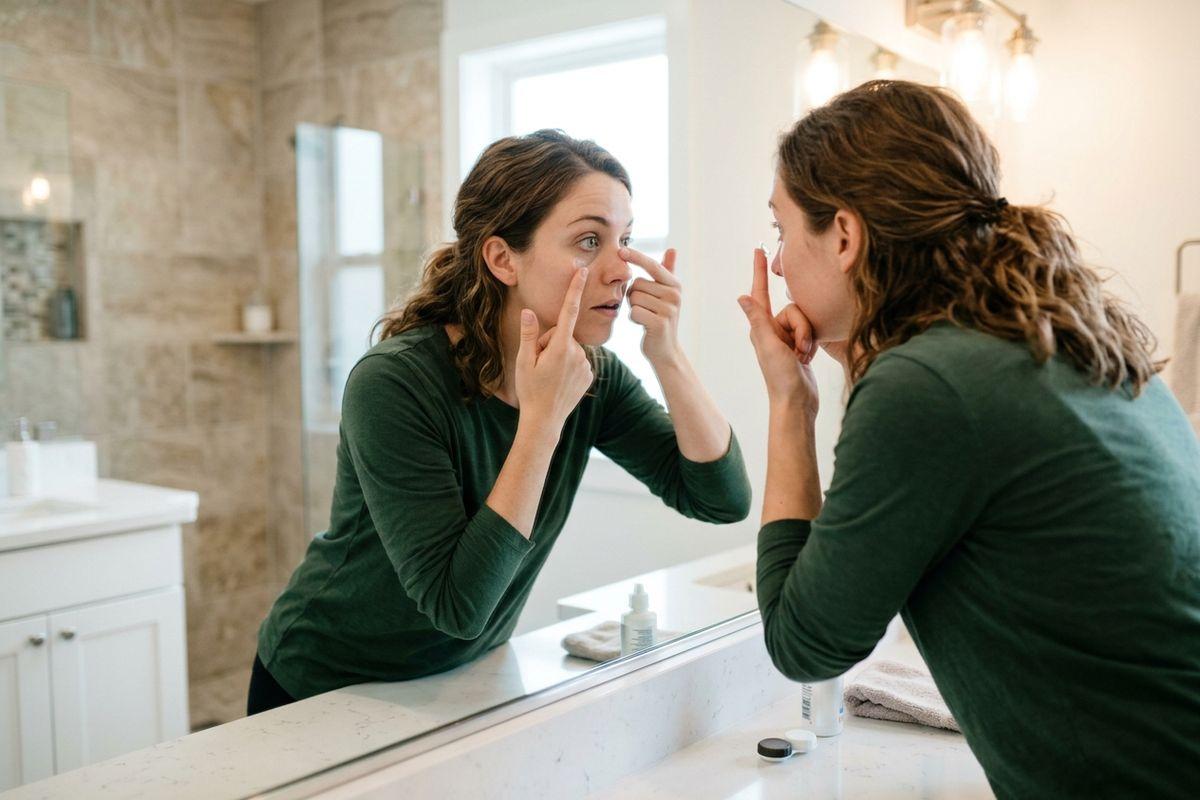
Dealing with dry eye is frustrating enough, but once you add contact lenses to the equation, things can really start to add up. Dry eye and contact lenses don’t always get along, and if you’ve been pushing through the discomfort, there’s a reason it keeps happening.
The right contact lens for dry eye depends on your specific situation, but options range from daily disposables and silicone hydrogel lenses to specialty scleral lenses for more serious cases. Finding the right fit starts with understanding the underlying cause of your symptoms. Your optometrist can uncover what’s causing that dryness so you can see clearly again without the constant irritation.
Why Contact Lenses Can Make Dry Eye Worse
Most contact lenses sit directly on your cornea, the clear front surface of your eye. As the day goes on, the lens absorbs moisture from your tear film, the thin layer of fluid that keeps your eye comfortable. Less fluid on the surface means dryness, redness, and that gritty, irritated feeling.
Protein deposits from your tears also build up on the lens over time. That buildup reduces how well your tears spread across the lens. Add in reduced oxygen flow from lenses that don’t breathe well, and irritation becomes hard to avoid for people already prone to dry eye.
The Main Types of Contacts for Dry Eye
Many people push through dry eye symptoms every day to enjoy the convenience of contact lenses, but you don’t have to accept discomfort as a normal part of vision correction. Several lens technologies exist to help your eyes retain moisture all day long.
Daily Disposable Lenses
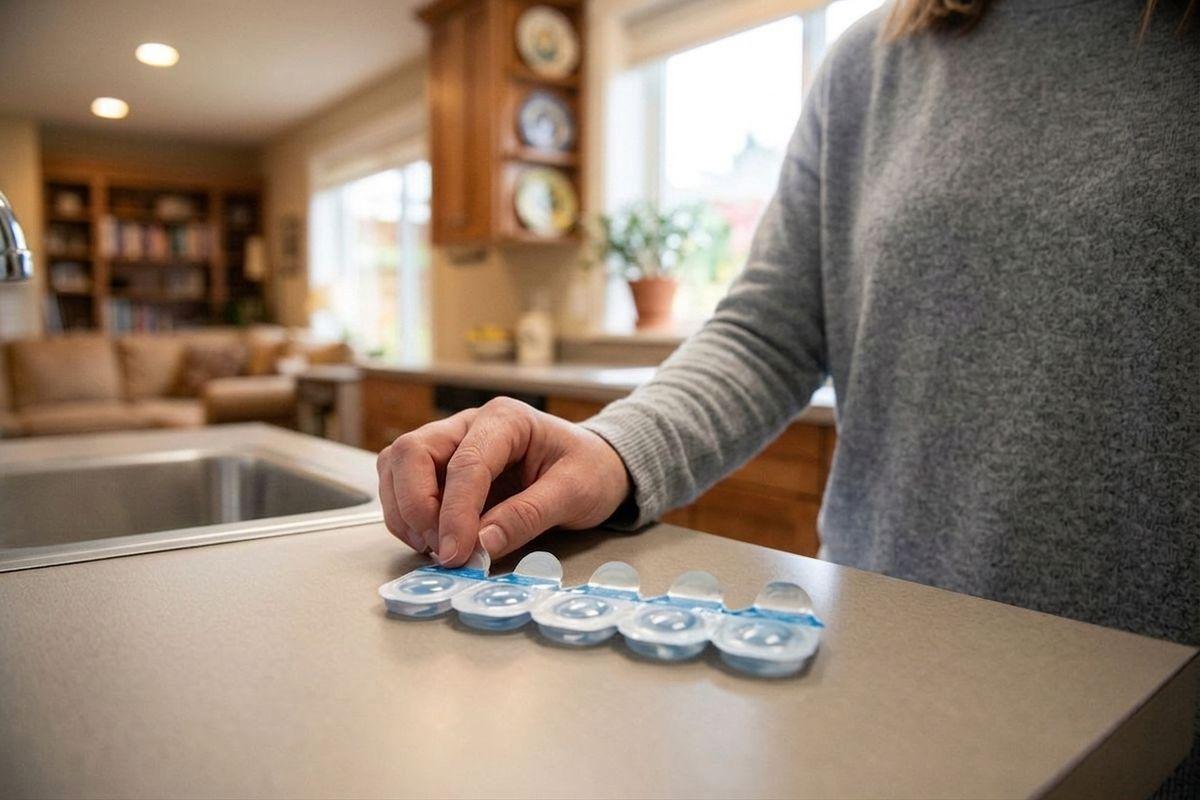
One of the best ways to avoid protein deposits on your lenses is to replace them frequently. With daily disposable lenses, you open a fresh pair every morning and throw them away at night. No deposit buildup. No cleaning solutions with preservatives that can bother sensitive eyes. For many people with mild to moderate dry eye, switching to daily disposables makes a real difference in comfort.
Silicone Hydrogel Lenses
Silicone hydrogel lenses can allow significantly more oxygen to reach your eye than older soft lens materials. More oxygen means less irritation over the course of a long day. They’re a solid option if you wear contacts for extended hours and notice your eyes feel worse as the day goes on.
Lenses with Lower Water Content
This might seem backward, but high-water-content lenses can actually pull more moisture from your eyes to stay hydrated themselves. Lenses made with lower water content are less likely to borrow from your tear film. For mild to moderate dryness, this small material difference helps your eyes stay comfortable longer.
Going Beyond Soft Lenses with Scleral Contacts
Sometimes standard soft lenses simply cannot provide the relief you need, which is where specialty options come in.
What Are Scleral Lenses?
Scleral lenses are large-diameter rigid lenses that vault completely over the cornea and rest on the white part of your eye, called the sclera. The space between the lens and your cornea fills with a saline solution, creating a fluid-filled dome that keeps your eye’s surface hydrated all day long. Each lens is custom-fitted to the exact shape of your eye by your optometrist.
Who Scleral Lenses Are Often Right For
If standard lenses haven’t helped, scleral lenses may be the next step. They’re often recommended for people with severe dry eye, irregular corneas, or conditions that affect tear production at the root level.
Autoimmune diseases like Sjögren’s syndrome and rheumatoid arthritis can significantly reduce your body’s ability to produce tears. Scleral lenses are often medically necessary for people managing these conditions or other severe ocular surface diseases. In those cases, specialty lenses are just as much about comfort as they are about protecting your long-term eye health.
For some patients, improving the health of the ocular surface itself can also make contact lens wear more comfortable. Treatments such as Tixel® can help address the underlying causes of dry eye by supporting healthier tear production and reducing inflammation around the eyes. When dry eye symptoms improve, many contact lens wearers find they can enjoy clearer, more comfortable vision throughout the day.
Simple Habits That Help Contacts Feel More Comfortable
The lens type matters, but how you use them plays a huge role in how your eyes feel. A few daily adjustments make a noticeable difference in your overall comfort.
Try integrating these simple habits to keep your eyes feeling fresh:
- Proactively use rewetting drops made specifically for contact lens wear throughout the day, not just when your eyes feel bad
- Replace your lenses on schedule and never stretch the wear period past the recommended 1-day, 14-day, or 30-day mark.
- Give your eyes a break by wearing glasses on some days, especially during long screen sessions
- Proper lens care goes a long way toward preventing irritation. Focus on good cleaning, storage, and wear habits to reduce your risk of complications.
Find the Perfect Fit for Your Eyes
From a precise prescription to a comfortable fit, a contact lens exam is where it all starts. Your optometrist assesses the health of your tear film and your eye’s surface before recommending any specific lens. From there, you get to try options in the office and test their comfort before committing to a full supply. Your lifestyle, work environment, and ocular health all factor into which lens actually works for you.
You don’t have to keep choosing between clear vision and comfortable eyes. Schedule a contact lens exam with Towne and Country Eyecare Associates and find out what’s possible for your vision.